NYC Local Law 154 in 2026: What the New DOB NOW “No Fossil Fuel” Banner Means for Affordable Housing
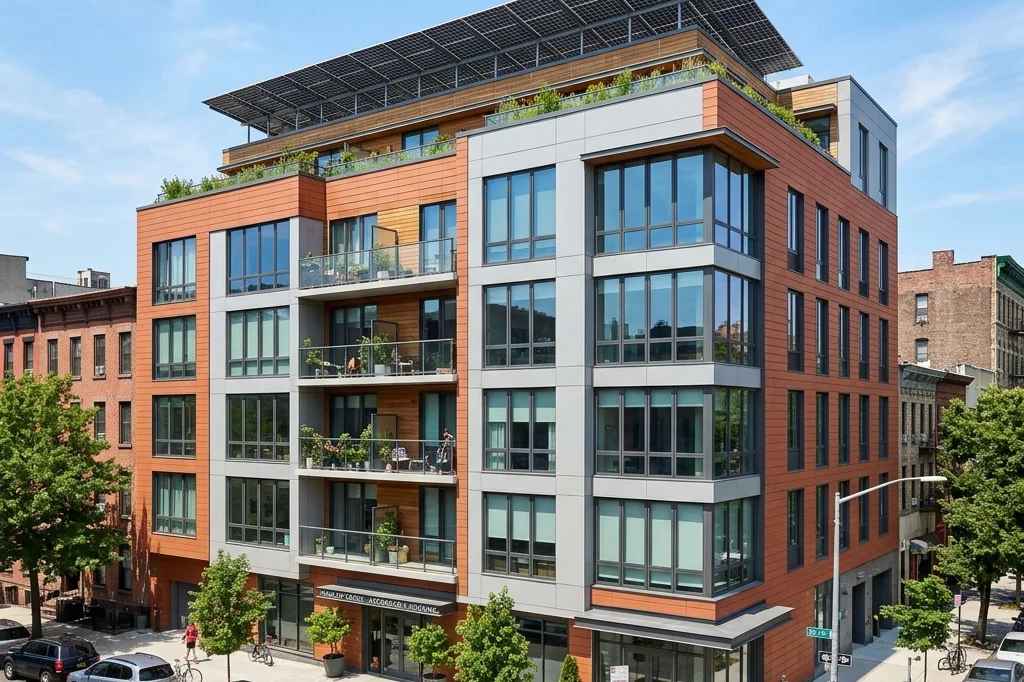
For the first few years after Local Law 154 was enacted, much of the conversation focused on what was coming.
In 2026, that conversation has changed.
Local Law 154 is now actively affecting a new category of New York City construction: low-rise affordable housing. And the change is visible directly inside DOB NOW.
Beginning February 2, 2026, the New York City Department of Buildings began displaying a “No Fossil Fuel” banner on the DOB NOW Property Profile for certain affordable-housing projects that fall under Local Law 154.
For developers, architects, engineers and affordable-housing owners, this is more than another DOB notification.
It means electrification requirements are moving directly into the permitting workflow.
What Changed for Affordable Housing in 2026?
Local Law 154 limits onsite combustion of substances that emit 25 kilograms or more of carbon dioxide per million BTUs of energy in covered new buildings. In practical terms, that restricts most conventional building-connected natural-gas and fuel-oil systems used for heating, cooking and other building functions.
The law has been phased in rather than imposed on every project simultaneously.
For affordable housing fewer than seven stories tall, the delayed compliance period ended at the end of 2025. DOB defines qualifying affordable housing for this purpose as a building where at least 50% of dwelling units are subject to a regulatory agreement, restrictive declaration or similar governmental instrument for the creation or preservation of affordable housing.
DOB’s 2026 system update now makes that requirement much harder to overlook.
When a qualifying project involving a New Building filing or an Alteration-CO New Building with Existing Elements to Remain is submitted, DOB NOW can identify the property as being subject to the fossil-fuel limitations.
What Does the “No Fossil Fuel” Banner Actually Mean?
The wording is intentionally direct:
“No Fossil Fuel.”
But developers should understand what is happening behind that banner.
Local Law 154 does not simply regulate which boiler gets installed at the end of construction. The law affects whether DOB can approve the construction documents and issue permits for a covered new building.
The Administrative Code specifically provides that DOB cannot approve a new-building application or issue a permit connected with it if the project does not comply with the emissions restrictions.
That makes LL154 a design and permitting issue, not a compliance filing that can be corrected after construction is substantially complete.
If a project was designed around fossil-fuel equipment and the LL154 requirement is discovered late, the consequences may involve much more than replacing one piece of equipment.
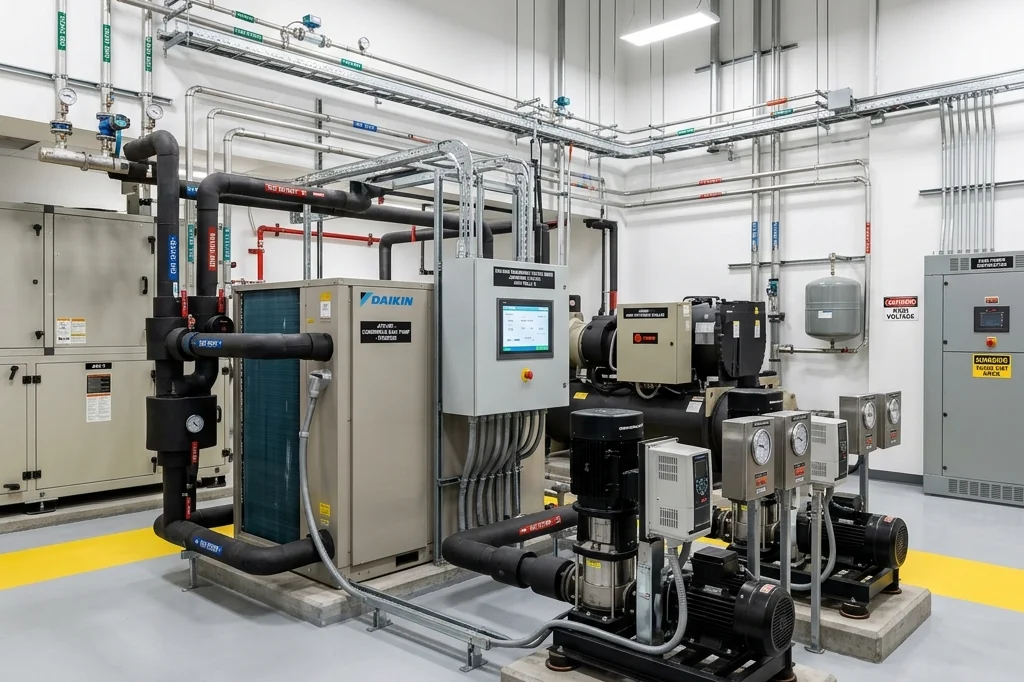
Mechanical design, electrical service, distribution, shaft space, rooftop equipment, domestic hot water, emergency power and utility coordination can all be affected.
Do All Fossil Fuels Disappear From an LL154 Building?
Not necessarily.
Calling Local Law 154 the “NYC gas ban” is convenient shorthand, but it can also oversimplify the law.
There are specific statutory exceptions.
DOB identifies exceptions for certain regulated utility facilities and DEP facilities, as well as specific spaces where combustion is necessary for:
- Manufacturing and industrial processing
- Laboratories
- Laundromats
- Hospitals
- Crematoria
- Commercial kitchens
- Emergency or standby power
Those exceptions generally apply only to the use and space for which the combustion is necessary.
There is also an important timing distinction involving service hot water.
For buildings other than Group R-3 buildings, the law provides a temporary exception relating to service hot water for applications submitted by the applicable July 2027 cutoff. DOB’s current compliance schedule identifies July 2, 2027 as the point when the broader phase applies to all occupancies and includes service hot water.
That distinction matters.
A project may therefore be subject to LL154 today for space heating and other uses while its domestic hot-water strategy falls under a different phase-in date.
That does not mean developers should automatically design fossil-fuel hot water into a project simply because a temporary exception exists. Equipment selected now may remain in the building for decades, while NYC’s broader decarbonization requirements continue moving in the opposite direction.
Filing Date Matters More Than Many Developers Realize
One of the most important parts of LL154 is the way DOB determines when the law applies.
According to DOB’s LL154 FAQ, the effective date is based on when the complete initial GC filing is submitted in DOB NOW.
A complete filing submitted before the applicable compliance date may remain outside that phase of LL154. But DOB also warns that a major redesign requiring the application to be resubmitted as a new and separate application can cause the newer LL154 requirements to apply.
This creates a very practical development risk.
A project cannot assume its original design assumptions remain protected indefinitely simply because some work began years earlier.
Filing history, application type, proposed occupancy, number of stories and subsequent redesigns all need to be reviewed together.
Taller Affordable-Housing Buildings Have a Different Timeline
The 2026 DOB update also highlights the distinction between low-rise and taller affordable-housing developments.
For qualifying affordable housing that is seven stories or taller, DOB’s current schedule provides a later LL154 compliance date of December 31, 2027.
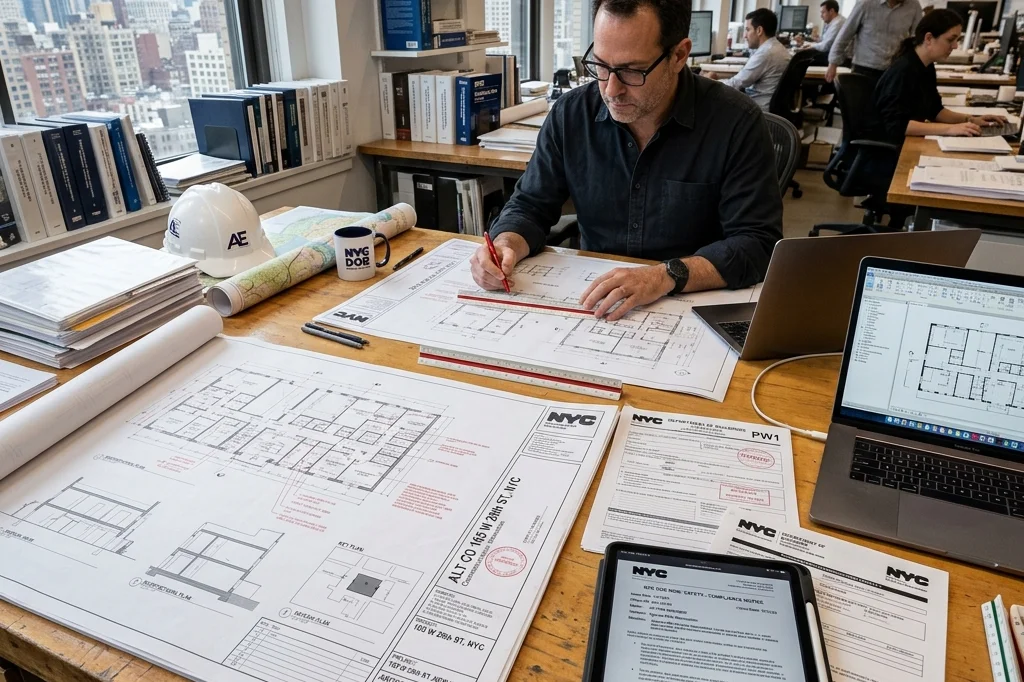
DOB’s January 2026 notice instructs applicants for qualifying affordable-housing buildings of seven stories or more to select the appropriate affordable-housing exception on the PW1. If that exception is selected, the Zoning Total Building Stories entered in DOB NOW must be seven or higher.
That sounds administrative, but it reinforces an important point:
LL154 compliance is increasingly being validated through the information entered into DOB NOW.
Your design strategy and your filing strategy have to tell the same story.
July 2, 2027 Is Now a Design Deadline, Not a Future Date
The next major LL154 milestone is July 2, 2027.
DOB’s current schedule says that from that point the requirements expand to all occupancies and include service hot water, subject to the law’s exceptions and the later affordable-housing provision for qualifying buildings seven stories or taller.
July 2027 may sound distant.
For a development project, it is not.
Projects being acquired, financed, designed or value-engineered in 2026 can easily have filing and construction schedules extending into that period.
A developer who waits until permit submission to consider electrification may discover that the building’s electrical infrastructure, mechanical rooms and equipment selections were all developed around assumptions that are no longer viable.
What Should Developers Be Doing Now?
For projects currently in planning or design, LL154 should be reviewed before the mechanical system is locked in.
A practical review should cover:
-
1. Confirm the DOB filing type and initial GC filing date: Determine whether the work is an NB or an Alt-CO New Building with Existing Elements to Remain and which LL154 phase applies.
-
2. Confirm building height, occupancy and affordable-housing status: The phase-in rules differ significantly depending on these factors.
-
3. Identify every proposed combustion source: Review space heating, domestic hot water, cooking, laundry, process loads and emergency systems separately rather than assuming one rule applies to everything.
-
4. Evaluate electrical capacity early: Electrification can shift significant loads onto the electrical service, making utility and service-adequacy planning part of the design process.
-
5. Verify exceptions rather than assuming them: Commercial kitchens, laboratories and other special uses may qualify for limited exceptions, but the exception should be documented around the actual use and location.
-
6. Review incentive assumptions before putting them in the budget: Con Edison currently states that new-construction multifamily space-heating projects are eligible for geothermal incentives but not air-source heat-pump space-heating incentives, while heat-pump water-heater incentives can be available for new construction. Incentives remain subject to program requirements and available funding.
Don’t Assume “Electric” Automatically Means “Efficient”
Meeting Local Law 154 and designing a high-performance building are not the same thing.
A project can eliminate onsite fossil-fuel combustion and still have excessive electrical demand, oversized systems or high operating costs.
That is why the better approach is not simply:
Gas boiler → electric equipment.
The building should be treated as a complete energy system.
Envelope performance reduces heating and cooling loads. Lower loads allow smaller equipment. Smaller equipment can reduce electrical capacity requirements. Good controls reduce unnecessary consumption. Domestic hot-water design can materially change peak demand.
In other words, compliance should be the starting point of the design process—not the finish line.
Incentives Need to Be Checked Project by Project
There is another common assumption worth correcting: that switching to heat pumps automatically qualifies a new project for large utility rebates.
Current Con Edison rules are more specific.
For multifamily projects, Con Edison currently states that new-construction space-heating applications are eligible for ground-source heat-pump incentives but not air-source heat-pump space-heating incentives. Heat-pump water heaters can qualify in both new and existing buildings, and projects must satisfy the program’s eligibility and service-adequacy requirements.
This is why incentives should be verified while systems are still being evaluated—not added to a pro forma based on a generic rebate estimate.
Local Law 154 Is Becoming Part of Normal NYC Development
The biggest change in 2026 may not be a new piece of mechanical equipment.
It is that LL154 is becoming part of the normal DOB development process.
The “No Fossil Fuel” banner is a visible example of that transition.
New York City is moving from telling the market that building electrification is coming to embedding those requirements into its approval systems.
For affordable-housing developers under seven stories, that transition has already happened.
For many larger projects, July 2, 2027 is the next major threshold.
And for projects being designed today, the smartest time to determine what that means is before the drawings—not after DOB reviews them.
Frequently Asked Questions
Generally, LL154 applies to New Building applications and Alteration-CO applications that must be filed as New Buildings with Existing Elements to Remain. Ordinary existing-building work does not automatically become subject to LL154 merely because the building currently uses fossil fuels. DOB’s FAQ confirms, for example, that an existing building can generally convert from oil to gas if the work does not trigger the covered new-building filing type.
It is a DOB NOW Property Profile notification associated with buildings subject to Local Law 154’s onsite fossil-fuel combustion restrictions. DOB expanded the banner implementation in February 2026 to qualifying affordable-housing buildings fewer than seven stories.
No. LL154 establishes an emissions limit that effectively prevents most conventional fossil-fuel systems in covered new buildings, but the law contains specific exceptions for certain uses and facilities, including commercial kitchens, laboratories, manufacturing, laundromats and emergency or standby power.
July 2, 2027 is the next major phase, when DOB’s schedule applies the requirements to all occupancies and includes service hot water, subject to applicable exceptions. Qualifying affordable housing seven stories or taller has a separate December 31, 2027 date.
Yes. The law states that DOB cannot approve construction documents or issue associated permits for a covered new building that does not comply with the applicable emissions restrictions.
Plan Before You File
Local Law 154 compliance should be evaluated while the building’s mechanical, electrical and envelope strategies can still be changed without disrupting the entire project.
The Cotocon Group works with New York City owners, developers and project teams to evaluate Local Law 154 applicability, electrification strategies and the interaction between today’s design decisions and future NYC emissions requirements.
Planning a new building or major redevelopment in NYC? Contact The Cotocon Group before the filing or mechanical design is finalized.